Ignite the Joy of Writing: Why Kids Alphabet Tracing Pages Are Essential for Early Learning
Learning to write is one of the most foundational milestones in a child’s early development—and it begins long before they hold a pencil with confidence. Kids alphabet tracing pages are more than just simple worksheets; they’re carefully designed tools that support cognitive growth, motor development, and emotional engagement. Whether you're a parent, educator, or caregiver, understanding how these handwriting activity pages work—and why they matter—can transform how you nurture early literacy.
What Are Kids Alphabet Tracing Pages?
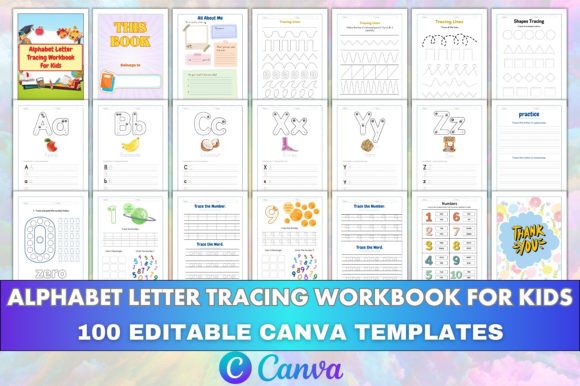
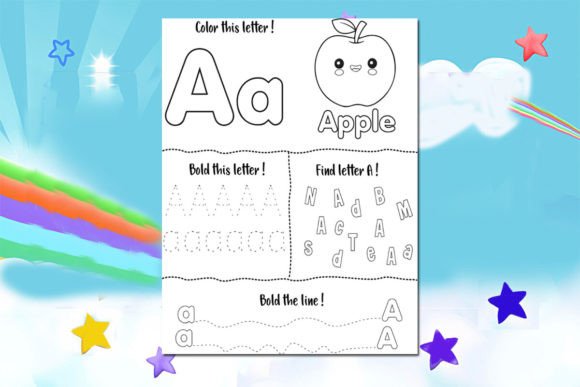
Alphabet tracing pages are printable or booklet-style learning resources that guide children through the formation of uppercase and lowercase letters using dotted lines, arrows, and visual cues. Each page typically features:
- A clear, bold letter model (often with directional arrows showing stroke order)
- Dotted or dashed outlines for tracing
- Supportive illustrations—like an apple beside “A” or a bee beside “B”—to reinforce letter-sound connections
- Simple word-building exercises (e.g., tracing “cat” after practicing “C”, “A”, and “T”)
- Space for independent practice and creative extension
Unlike generic coloring sheets or flashcards, high-quality tracing pages are grounded in developmental science. They align with how young brains process visual information, retain motor patterns, and build neural pathways for writing fluency.
Why Tracing Matters: Beyond “Just Copying Letters”
It’s easy to assume tracing is passive—but research tells a different story. When children trace letters, they activate multiple brain regions simultaneously: the visual cortex (recognizing shape), the motor cortex (coordinating hand movement), and the language centers (linking symbol to sound). This multisensory experience strengthens memory, attention, and fine motor control.
Fine motor skills—the ability to coordinate small muscles in the hands and fingers—are critical not only for writing but also for everyday tasks like buttoning shirts, using scissors, and holding utensils. Tracing builds finger strength, wrist stability, and hand-eye coordination—all essential precursors to confident, legible handwriting.
Real-World Impact: From Classroom to Car Seat
Modern life moves fast—and learning shouldn’t wait for a desk. That’s where the portable, booklet format of many handwriting activity pages shines. Imagine:
- A 5-year-old tracing “S” and “T” while waiting at the pediatrician’s office
- A sibling duo practicing “M” and “N” during a quiet car ride—with no screens required
- A preschool teacher using themed tracing pages (“Ocean ABCs”) to extend a unit on marine life
This flexibility makes handwriting practice accessible, low-pressure, and naturally integrated into daily routines—not another item on a rigid “learning schedule.”
How These Pages Support All Learners—Not Just Beginners
One common misconception is that tracing pages are only for toddlers just learning the alphabet. In reality, well-designed activity pages scaffold learning across stages:
- Emerging learners (ages 3–4): Focus on large-motor strokes, left-to-right orientation, and letter recognition using bold, simplified models.
- Developing writers (ages 4–6): Introduce proper letter formation, spacing, and simple CVC (consonant-vowel-consonant) words like “dog” or “sun.”
- Confident beginners (ages 5–7): Reinforce consistency, introduce cursive readiness cues, and encourage sentence-level tracing (“I see a red ball.”).
Many booklets include built-in differentiation—such as optional challenge prompts (“Can you draw something that starts with ‘R’?”) or color-by-letter keys—that invite creativity without sacrificing structure.
Debunking Myths About Early Handwriting Practice
Let’s clear up some widespread assumptions:
- Myth: “Tracing hinders creativity.” Truth: Tracing provides a safe, structured foundation—like training wheels on a bike. Once muscle memory develops, children gain freedom to experiment, invent, and express themselves more confidently.
- Myth: “Digital apps replace the need for paper tracing.” Truth: While tablets offer interactive benefits, they lack tactile feedback—the resistance of pencil on paper, the pressure needed to form curves and lines. That physical sensation is irreplaceable for motor learning.
- Myth: “If a child can recognize letters, they’re ready to write them.” Truth: Letter recognition and letter production involve different neural pathways. A child may name all 26 letters yet struggle to reproduce even basic ones without guided practice.
Choosing the Right Pages: What Makes One Set Stand Out?
Not all tracing pages deliver equal value. Look for resources that:
- Follow evidence-based stroke order (e.g., starting capital “E” at the top, not the middle)
- Use developmentally appropriate sizing—larger letters for younger kids, gradually decreasing in size
- Incorporate playful, inclusive illustrations (avoiding stereotypes or overly complex scenes that distract from the letter)
- Offer variety—some pages focus on repetition, others on phonics integration or sensory elements (e.g., “trace with your finger first, then with a crayon”)
- Are printed on thick, smudge-resistant paper—or optimized for home printers with crisp, clean lines
When pages are bursting with lively colors and engaging exercises, they don’t just teach writing—they spark curiosity. A smiling sun beside “S”, a bouncing frog for “F”, or a glittery “G” invites joyful participation far beyond rote copying.
Building Lifelong Skills, One Stroke at a Time
The significance of early handwriting extends well beyond elementary school. Studies show strong correlations between early fine motor development and later academic success—including reading comprehension, math reasoning, and even executive function skills like planning and self-regulation.
Moreover, handwriting fosters a unique kind of focus. In an age saturated with rapid digital stimuli, the deliberate pace of tracing cultivates patience, attention to detail, and pride in personal effort. Children who regularly engage with thoughtful handwriting activities often develop stronger metacognitive awareness—“I made that. I improved that. I can try again.”
And let’s not overlook the emotional dimension: there’s profound joy in watching a child’s eyes light up when their “O” finally looks round, or when they proudly declare, “I wrote my name ALL BY MYSELF!” That moment isn’t just about penmanship—it’s about identity, agency, and belonging in the world of written language.
Getting Started: Simple Tips for Parents and Educators
You don’t need special training—just presence and encouragement. Try these practical strategies:
- Start short: 5–10 minutes daily is more effective than one long, frustrating session.
- Model with enthusiasm: Trace alongside your child—even if it’s just “Let’s make big, bouncy Bs together!”
- Emphasize process over perfection: Praise effort (“I love how carefully you stayed on the line!”) rather than outcome (“That’s the best B ever!”).
- Connect to real life: After tracing “P”, point out “STOP” signs, “PARKING”, or “PIZZA” on a walk.
- Rotate tools: Try crayons, washable markers, chalkboards, or even finger-painting on laminated sheets to keep engagement high.
Remember: every stroke is a step toward independence, expression, and lifelong learning. With the right kids handwriting activity pages, that journey doesn’t feel like work—it feels like play with purpose.
So go ahead—open a booklet, sharpen a pencil, and watch as your child’s confidence grows, letter by letter, line by line, smile by smile.