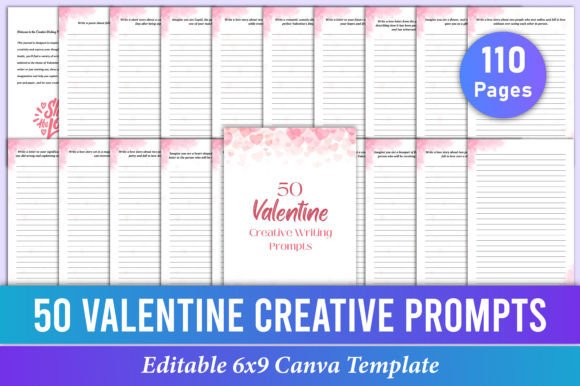
50 Valentine Creative Writing Prompts
Love isn’t just felt—it’s articulated, explored, and reshaped through language. The 50 Valentine Creative Writing Prompts is more than a themed journal; it’s a flexible creative tool designed for adults who write not just for romance, but for clarity, connection, and self-discovery. Whether you're drafting heartfelt letters, developing characters in a novel, brainstorming brand storytelling for a boutique gift shop, or guiding students through emotional literacy exercises, these prompts meet you where you are—with intention and room to grow.
Why These Prompts Stand Out
Not all writing prompts are created equal. Many rely on clichés (“Describe your perfect date”) or vague directives (“Write about love”). These 50 prompts avoid that trap. Instead, they invite specificity, reflection, and nuance—like “Write a letter from your future self to the person you’re learning to trust again” or “Describe a moment love felt like quiet repair, not grand gesture.” Each prompt is calibrated to spark authentic voice—not performance.
What makes them especially practical is their built-in adaptability. Every prompt works across formats: journal entries, social media captions, microfiction, podcast monologues, classroom warm-ups, or even client-facing copy for wedding planners, therapists, or greeting card designers. They’re not locked into one tone or audience—they respond to your voice, your goals, and your context.
Real Applications Across Roles
For educators and counselors: Use prompts like “List three ways love shows up in silence” or “Rewrite a childhood memory with kindness as the main character” to foster emotional vocabulary and reflective writing in teens and adults. Pair them with discussion guides or peer feedback frameworks—no prep needed.
For marketers and small business owners: Turn prompts into content pillars. A florist might use “Describe a bouquet that tells a story no words could” to inspire Instagram carousels or email newsletter themes. A dating app could adapt “Write the first message you’d send to someone whose values align—but whose hobbies surprise you” into user-generated campaign copy.
For writers and creators: These prompts serve as low-stakes entry points when facing revision fatigue or idea drought. Try pairing one with a constraint: write it in second person, under 100 words, or using only sensory details (no emotion words). That kind of focused play often unlocks deeper material for novels, essays, or spoken word pieces.
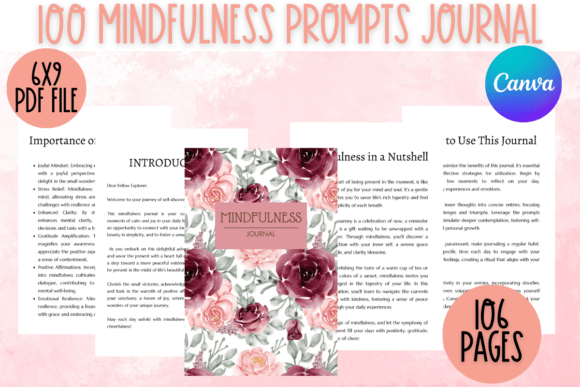
For designers and publishers: The editable Canva interior gives immediate design control—swap fonts to match brand guidelines, adjust color palettes for seasonal launches, or reformat layouts for digital workbooks vs. print journals. You’re not editing a static PDF—you’re shaping a living document aligned with your visual identity and audience expectations.
How to Use the Editable Canva Template Effectively
The included Canva link isn’t just convenient—it’s strategic. Because every element is editable (text, colors, fonts, spacing, even layout grids), you can tailor the journal to specific needs without design overhead. Here’s how professionals make it work:
- Customize by audience: Swap serif fonts and muted tones for a mature, literary feel—or go bold with rounded sans-serifs and warm pinks for teen workshops.
- Repurpose across platforms: Export individual prompt pages as JPGs for Pinterest pins, or compile 10 favorites into a branded PDF lead magnet.
- Maintain consistency: Save your brand’s color palette and font pairings in Canva’s brand kit—then apply them across all prompt pages in one click.
- Prepare for print: The 6×9 inch trim size, CMYK color mode, and 300 DPI resolution mean what you see in Canva translates cleanly to high-quality physical copies—ideal for gifting, retail, or workshop handouts.
Keeping Your Output Clear and Audience-Friendly
Great prompts only land when the environment supports honest expression. That’s why the journal’s compact size (6×9 inches) and 110-page count matter: it’s substantial enough to hold depth, but light enough to carry daily—no friction between inspiration and action. Encourage users to treat it as a working document, not a finished artifact. Cross out prompts that don’t resonate. Add sticky notes with follow-up questions. Leave margins wide for sketching or brainstorming.
To keep writing grounded and original, suggest simple filters: “Would this sound true if read aloud?” or “Does this reveal something I haven’t said before?” These aren’t about perfection—they’re about presence. And because each prompt avoids prescriptive outcomes (“you must feel…”), writers retain full ownership of tone, perspective, and pace.
More Than a Journal—A Creative Anchor
This isn’t a product designed for February 14 and forgotten by February 15. It’s built to evolve with its user. A teacher may start with prompts for empathy-building, then later adapt them for college application essay prep. A freelancer might use them to draft client proposals infused with warmth and authenticity. An entrepreneur could mine them for brand voice development—discovering how love, care, and commitment show up in service, not just sentiment.
The durability comes not just from the print-ready file quality, but from the prompts’ structural flexibility. They don’t assume expertise, experience, or relationship status. They meet people where they are: healing, celebrating, questioning, creating, or simply trying to name something real.
If you value tools that respect your time, honor your voice, and scale with your goals—this is one worth keeping within reach. And if you find yourself reaching for it beyond Valentine’s Day? That’s not off-brand. That’s by design.
Editable Canva templates give you full creative control—so you’re never stuck with someone else’s vision. Just open the link, personalize, and publish—whether that means printing a keepsake journal, sharing a digital workbook, or building a signature resource for your community.